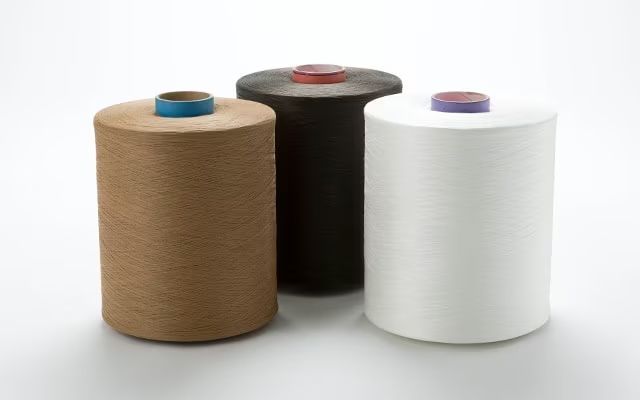

How Yarn Engineering Impacts Carpet Performance: From Denier to Crimp
From Denier to Crimp
Walk into any space—an office lobby, a hotel corridor, or a living room—and you’ll immediately notice the carpet. What you don’t notice, however, is what determines whether that carpet will still look and feel the same a year later.
Why do some carpets flatten within months, while others retain their structure and appearance for years?
The answer lies deeper than fibre type or design. It lies in yarn engineering.
Long before a carpet is woven or tufted, its performance is already being shaped—at the level of the yarn itself.
Beyond Fibre: The Hidden Layer of Performance
In most conversations around carpets, the focus tends to be on material—polyester, nylon, wool. While material choice is important, it is only part of the story.
Within synthetic fibres, especially polyester, the engineering of the yarn plays a defining role in:
- Durability under foot traffic
- Softness and tactile feel
- Resistance to crushing and matting
- Visual richness and texture
This becomes even more critical in the case of Bulked Continuous Filament (BCF) yarn, which is widely used in carpets due to its structure, consistency, and performance characteristics.
At Beekaylon, BCF yarn is engineered with a strong focus on balancing these parameters—ensuring that the end product performs as intended across different applications.
What Makes BCF Yarn Different?
BCF yarn is not spun from short fibres. Instead, it is made from continuous filaments that are extruded, textured, and bulked to create a yarn with volume, resilience, and uniformity.
This structure offers several inherent advantages:
- Consistency across batches
- Better resistance to shedding compared to staple yarns
- Enhanced durability, especially in high-traffic environments
- Superior bulk and coverage, contributing to fuller-looking carpets
Globally, synthetic fibres dominate the carpet industry, with polyester and nylon accounting for a significant share of residential and commercial carpet manufacturing. Within this, BCF yarn continues to be a preferred choice due to its balance of performance and cost-efficiency.
But even within BCF yarn, not all yarns perform the same.
That’s where engineering variables come in—but increasingly, it’s also about functional enhancements built into the yarn itself.
At Beekaylon, BCF yarn is engineered not just for structural performance, but for the conditions in which the final product is used. Beyond parameters like denier and crimp, Beekaylon’s BCF yarns are developed with application-specific features such as stain-proof properties that help maintain appearance over time, fire-retardant variants for enhanced safety in commercial environments, UV stability to resist colour degradation in sunlight-exposed areas, and antistatic properties that reduce dust attraction and static build-up. For applications where comfort is key, super soft BCF yarns offer a more refined tactile experience without compromising durability.
This shift—from standard yarn to performance-engineered yarn—is what enables manufacturers to design carpets not just for use, but for real-world conditions.
The Core Parameters That Define Performance
Denier: The Foundation of Strength
Denier refers to the thickness of individual filaments.
- Higher denier → thicker filaments → greater durability
- Lower denier → finer filaments → softer feel
In practical terms:
- Carpets designed for airports, offices, or hotels typically use higher denier yarns for durability
- Residential carpets, where comfort is a priority, often use lower denier for a softer touch
The key is not choosing one over the other—but choosing what suits the application.
Filament Count: The Texture Factor
Filament count refers to the number of filaments within a yarn.
- More filaments → smoother, silkier texture
- Fewer filaments → coarser, more rugged feel
This directly impacts:
- Surface feel
- Light reflection (and therefore visual appeal)
- Perceived quality
High filament count yarns are often used in premium carpets and rugs, where softness and aesthetics are critical.
Crimp: The Source of Resilience
Crimp is the waviness or texture introduced into the yarn during processing.
It plays a crucial role in:
- Creating bulk
- Allowing the carpet to bounce back after compression
- Maintaining structure over time
Without adequate crimp, carpets tend to:
- Flatten quickly
- Lose their visual depth
- Show wear more prominently
In BCF yarns, controlled crimping is what gives carpets their long-term resilience.
Twist: Holding It All Together
Twist refers to how tightly the filaments are wound together.
- Higher twist → better durability and wear resistance
- Lower twist → softer feel but less structural integrity
Twist also affects:
- Surface definition
- Resistance to fraying
- Overall lifespan
In high-performance carpets, twist is carefully calibrated to ensure the yarn holds its structure under repeated use.
It’s Not One Factor—It’s the Combination
One of the most common misconceptions is that improving a single parameter will automatically improve performance.
In reality, carpet performance is the result of a balanced combination of all these factors.
For example:
- A high-denier yarn without sufficient crimp may still flatten over time
- A soft, high-filament yarn without adequate twist may lack durability
This is where expertise in yarn engineering becomes critical—understanding how these variables interact, and optimising them for specific end uses.
From Yarn to Application: Where It All Comes Together
Different environments demand different performance outcomes.
High-Traffic Commercial Spaces Require:
- Higher denier
- Strong twist
- Robust crimp
→ Focus on durability and shape retention
Residential Interiors Require:
- Softer filaments
- Higher filament count
→ Focus on comfort and feel
Decorative and Design-Led Carpets Require:
- Balanced engineering
- Attention to texture and appearance
At Beekaylon, BCF yarn solutions are developed keeping these varied applications in mind, ensuring that manufacturers can achieve the desired balance between performance, aesthetics, and cost-efficiency.
Why This Matters More Than Ever
As the global carpet industry evolves, expectations are changing.
Buyers today are not just looking for cost-effective solutions—they are looking for:
- Consistency in quality
- Predictable performance
- Materials that align with specific use cases
At the same time, the scale of production has increased, and even minor variations in yarn can lead to noticeable differences in the final product.
Understanding yarn engineering is no longer a niche technical concern—it is becoming a core decision-making factor.
The Takeaway
Carpet performance doesn’t begin on the loom. It begins at the yarn.
From denier and filament count to crimp and twist, each parameter plays a role in shaping how a carpet will perform, feel, and age over time.
BCF yarn, with its continuous filament structure and engineered properties, offers a powerful foundation—but it is the precision of engineering that ultimately determines the outcome.
For manufacturers, designers, and buyers alike, a deeper understanding of these factors leads to better products, better choices, and better long-term performance.